
O-Day - Corundum Conundrum - UPDATE #2 - Improved procedure by TIBI
A new path forward?

LIVESTREAM at 22:30 on 23 March 2025
Discussion with Tibi on the experiment, Thursday 20 March 2025
Basic Experimental Procedure from TIBI in GIF and Text
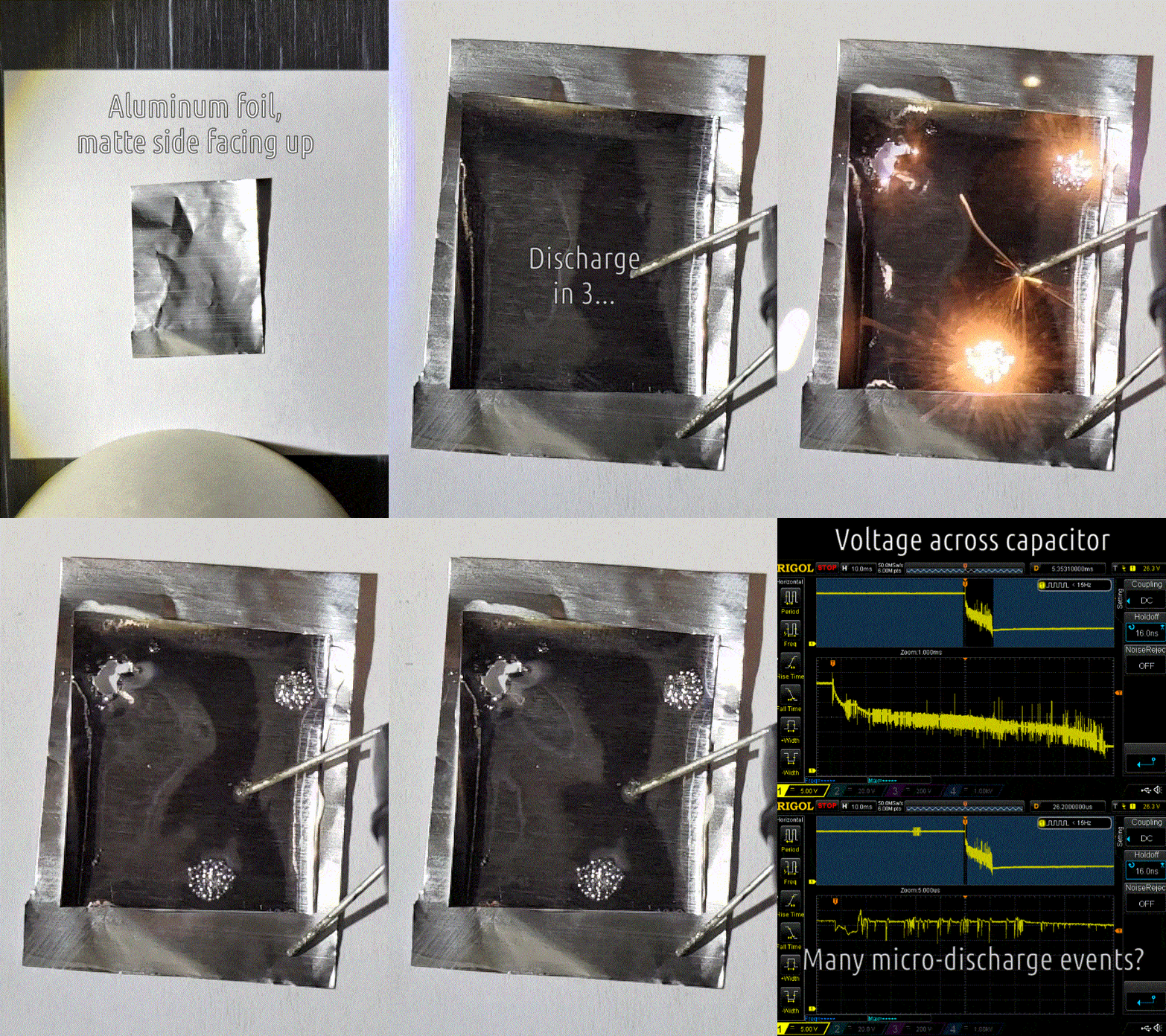
Perhaps a few details around these experiments that were not mentioned in that GIF, that DIY guide. So I think that the DIY guide explains what to.
The question is how many of those things you need to perform, how many times? And what is the procedures to gather the spheres, in order to obtain a couple of spheres that is worth putting in an SEM. So I've used maybe two dozen of foil pairs. So a pair is a larger, piece, which is the anode, and the smaller piece goes on top, which is the cathode.
And of course, cathode emits electrons. I thought it was easier to jump electrons from a smaller piece. I haven't tried the other way around, but you can try. So maybe two dozens of electrode pairs. And the way I do it is I have the, lab power supply set to 30V. I have two leads coming down on the table.
I take the capacitor, touch it to the wires, the crocodile clips that come from the power supply. Charge it up - it produces a spark when you charge it up of course, because you have a high in rush current from the power supplies capacitor into the outside the capacitor. And there is no limiting inductor or resistor in between.
But you can use a resistor. Not important. What is important is when you charge the capacitor, you want to solder some copper leads to the capacitor to make sure that you're not dealing with ferromagnetic leads. And when you charge it up, make sure that you don’t charge it up by the ends of those copper wires, touching maybe ferromagnetic crocodile clips or whatever you might touch it to, to charge it up.
Then once it’s charged up, you just, gently lower it down and touch on the electrode pair, on the foil pair. You can expect, this discharge event, which branches out in multiple random places, or you can have, at times one localised discharge, which, is, let's say, more violent. And you can see you can monitor the voltage on the capacitor - it discharges more or abruptly.
If you have those localised high current discharges, maybe, your aluminium plates are touching somewhere. Maybe the ends. Maybe you did not curl the ends of the cathode upwards. So the ends could touch the other plate and have a localised discharge and also melting. You can also have - I also had - multiple times - melting together of the two pairs and not producing any of these, craters which look like EVO with these marks.
Then I didn't discard that pair. I just, ripped them apart. They were touching at a single point, ripped them apart with the water, on them or between them. Place them down together, charge the capacitor up again, discharge it again, and maybe do this five times, until you have covered the surface area with visibly, let's say, sufficient, of these craters. So you can say, okay, let's move on to the next, electrode pair.
You do this with two dozens of electrode pairs. Then what I did is, I broke them apart. I took the electrode pairs apart so the water can dry and left it to dry an hour and come back and use a toothbrush, a clean toothbrush.
Scrape every single foil. So two dozen times, two times, two sides. You need to do a lot of scraping to scrape it down to an area of, let's say, a working table or a working surface, a clean working surface. I, I did use a aluminium sheet to work on. Scrape whatever comes off from those electrode pairs onto a clean surface.
Then you can attempt extracting with a magnet, these spheres, then the typical stuff, you look under the microscope, make groupings if you want, transfer it for SEM and do the Microscopy. - TIBI, 20 Mar, 2025
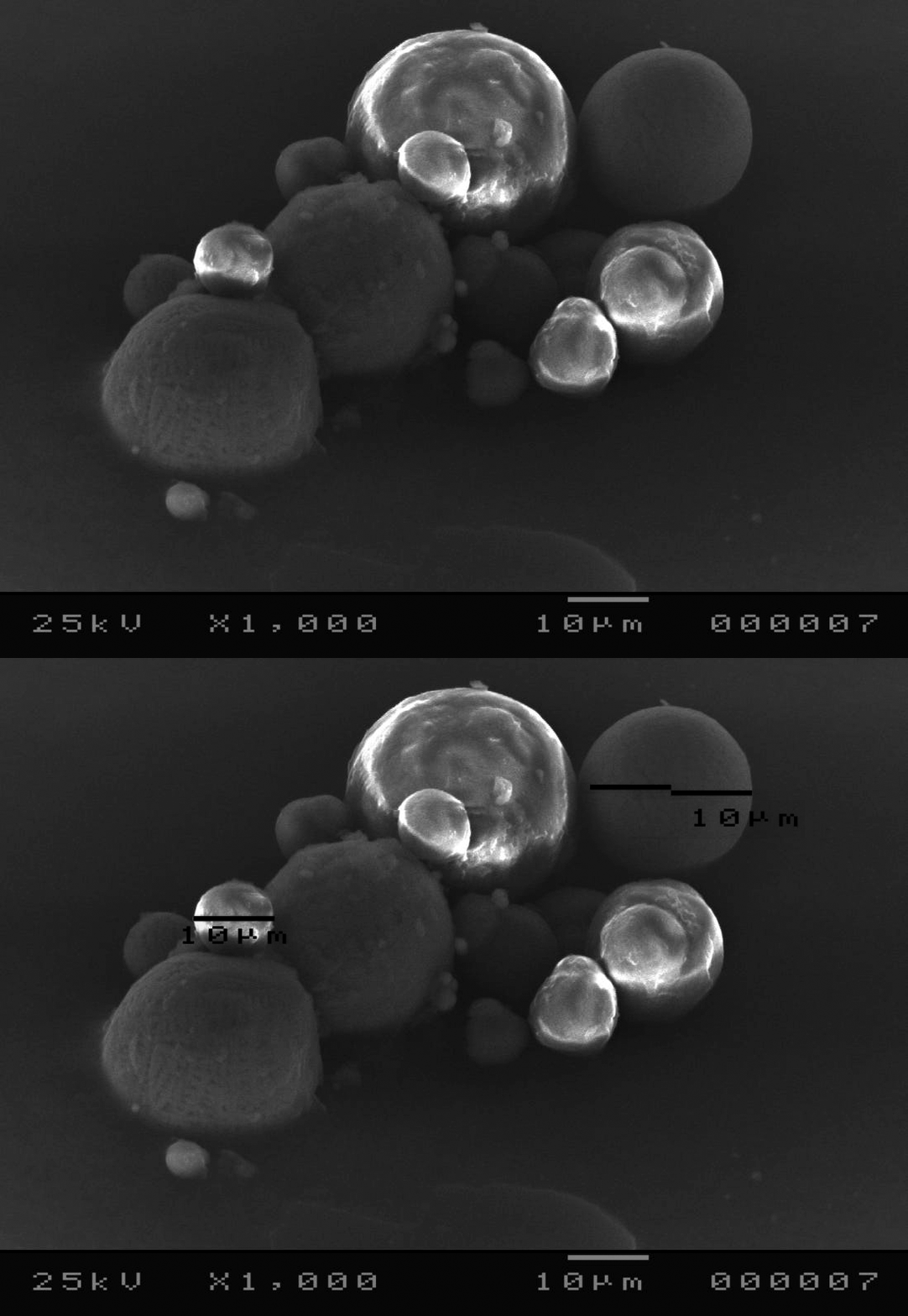
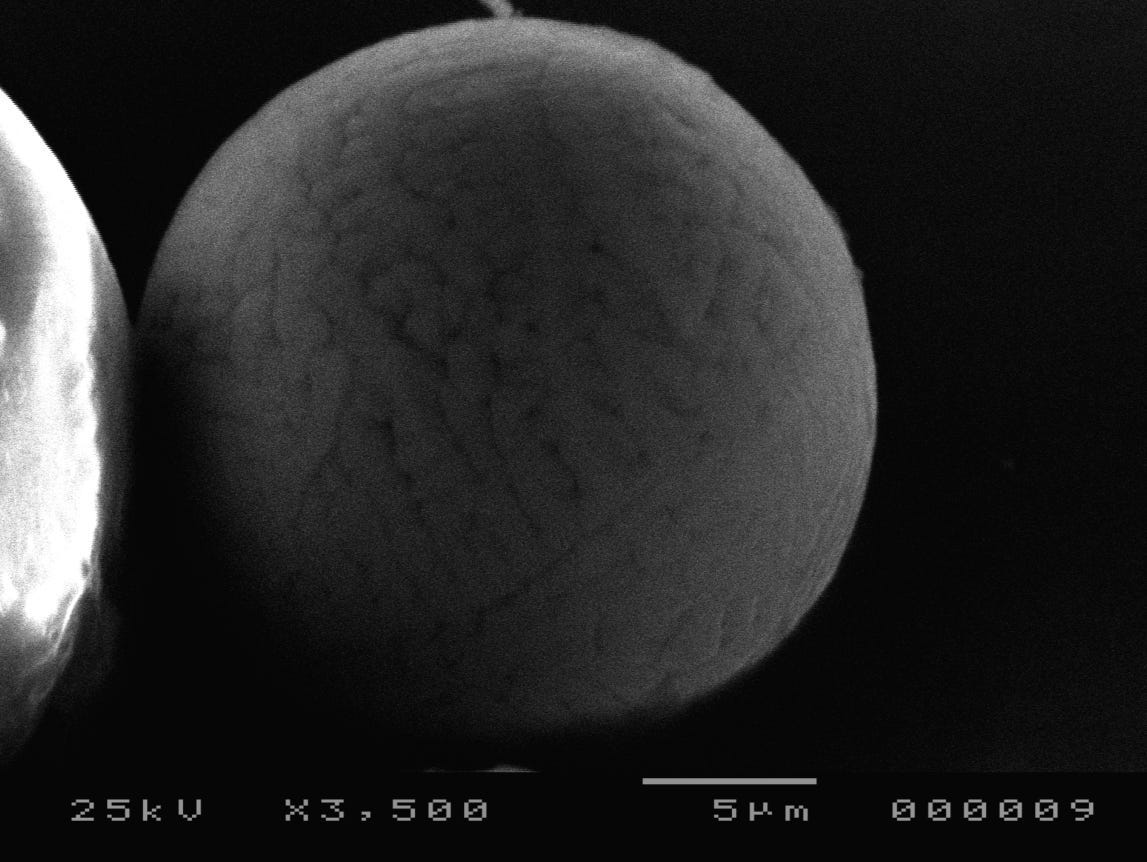
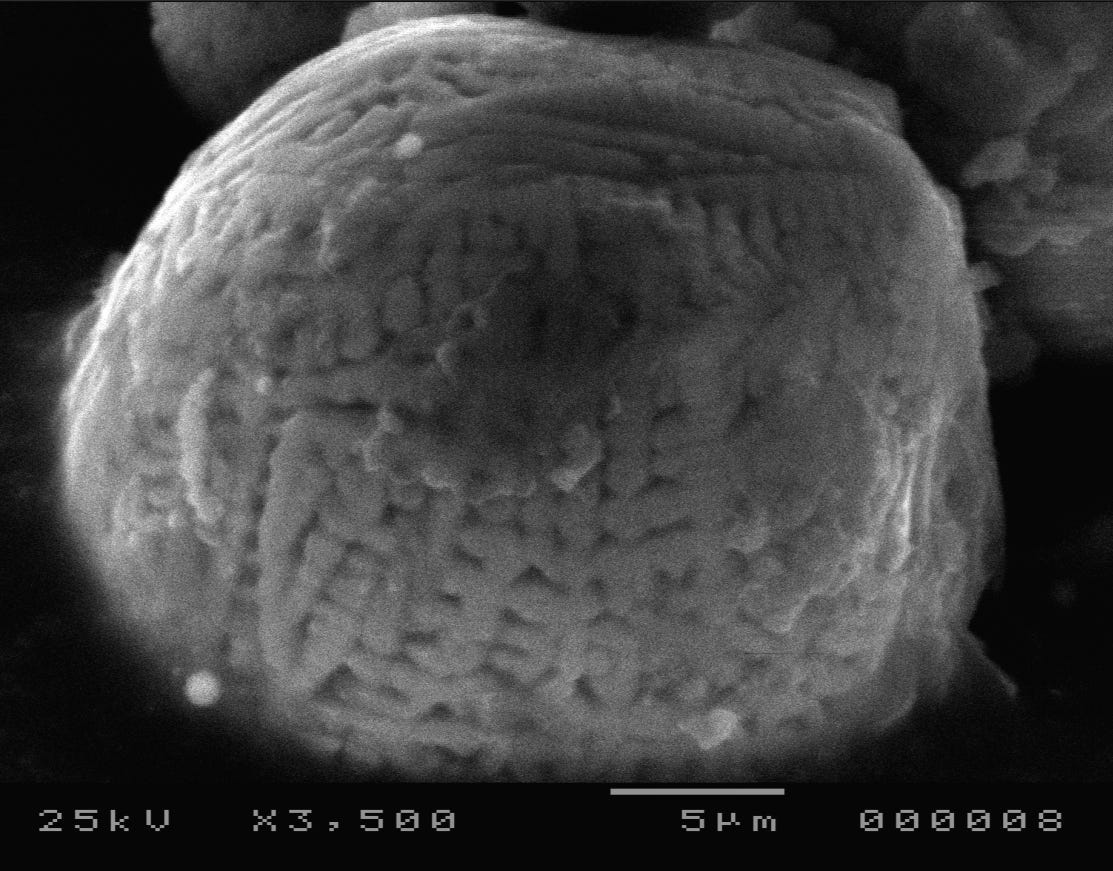
Result of Low Voltage experiment under SEM
NOVA Basic - First look at 2 minute processed charcoal
This sample, produced in a NOVA reactor in Hungary and analysed in 2017 contains Fe+O crenellated spheres (at least one hollow) and SiO2 rich material.
UPDATE #1 - first apparent replication by Martyn Kemp
Martyn Kemp attempted a replication with a bug zapper and then after a few modifications, got what looks to be a working replication setup.
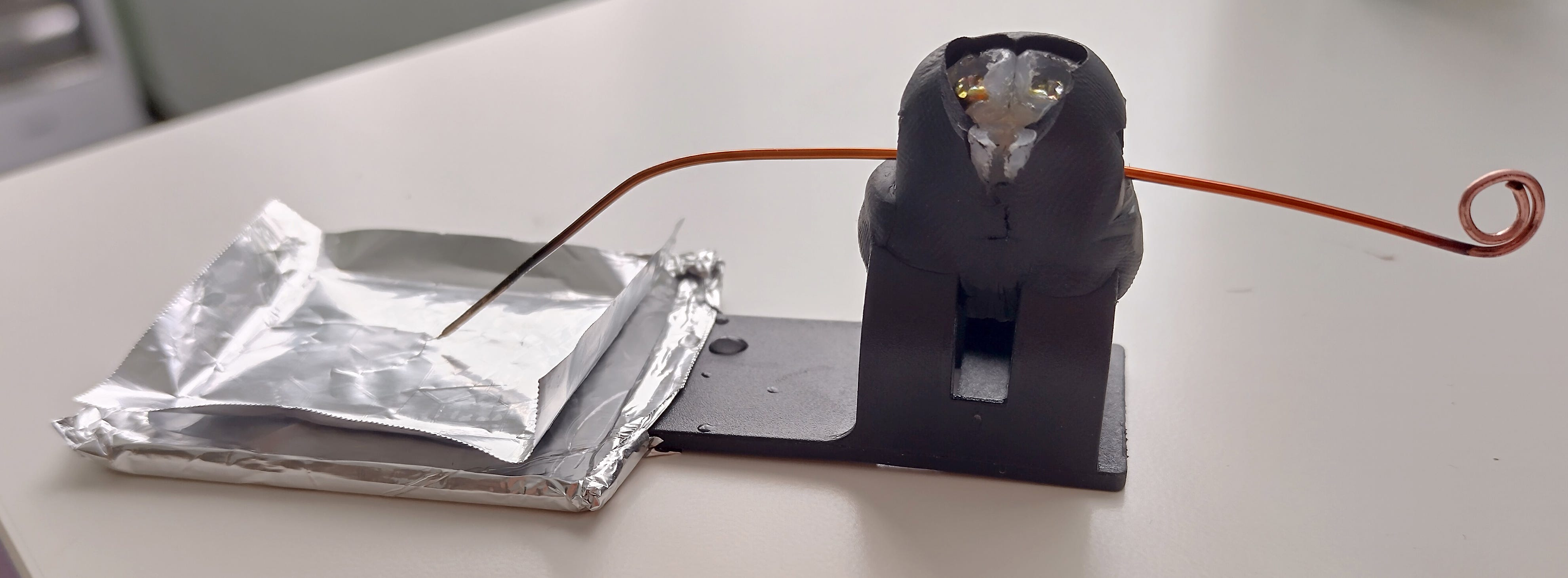
See the development of craters away from the electrode in this ping-pong animation.
UPDATE #2 - Improved procedure by TIBI
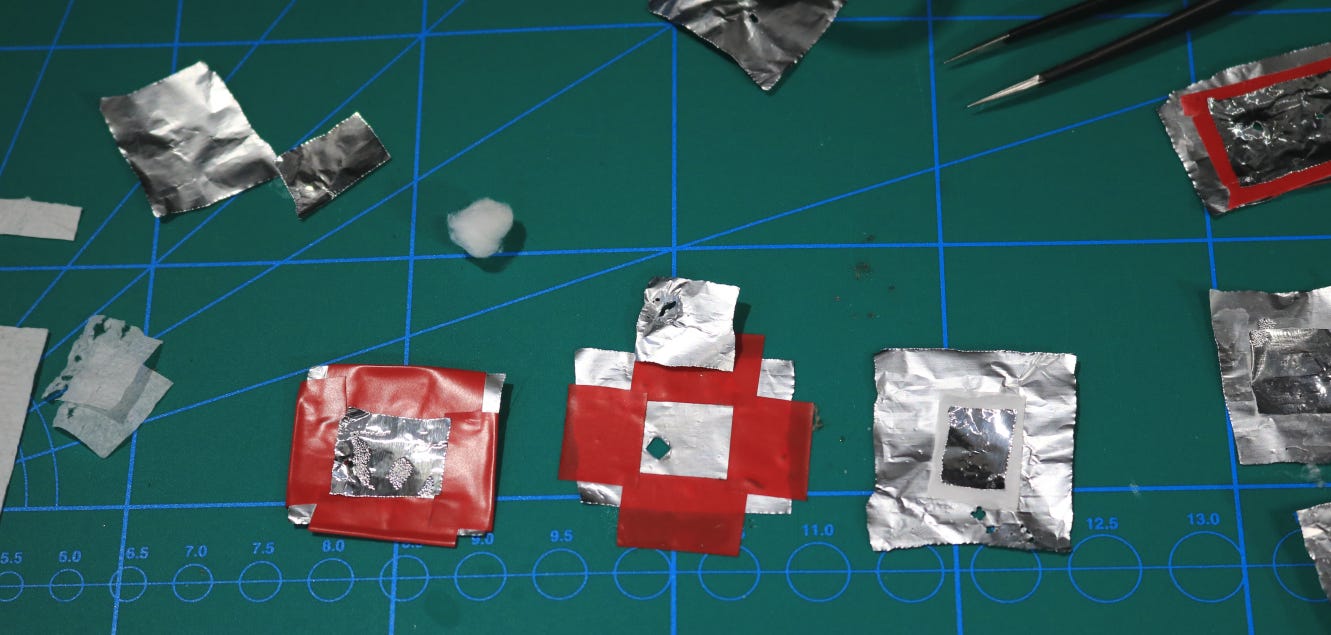
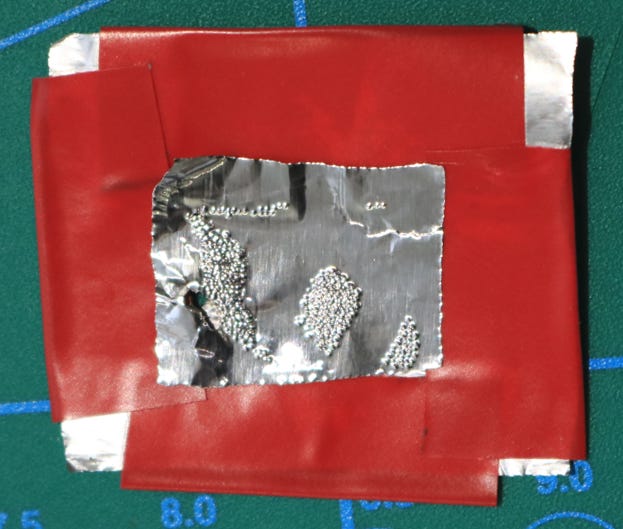
“Instead of curling the edges up, I tried laying down an electrical tape on the larger Anode bottom foil, to insulate it where the edges of the smaller Cathode upper foil. I have also added a few strands of natural cotton wool fibers as spacers, in attempt to control the water thickness. This approach - while still sporadic - produced the most "successful" LV experiment on my side so far (largest area of craters), and my 4700uF capacitor initial voltage was 30V and after the (partial) discharge 20V remain.” - TIBI, 26 Mar, 2025
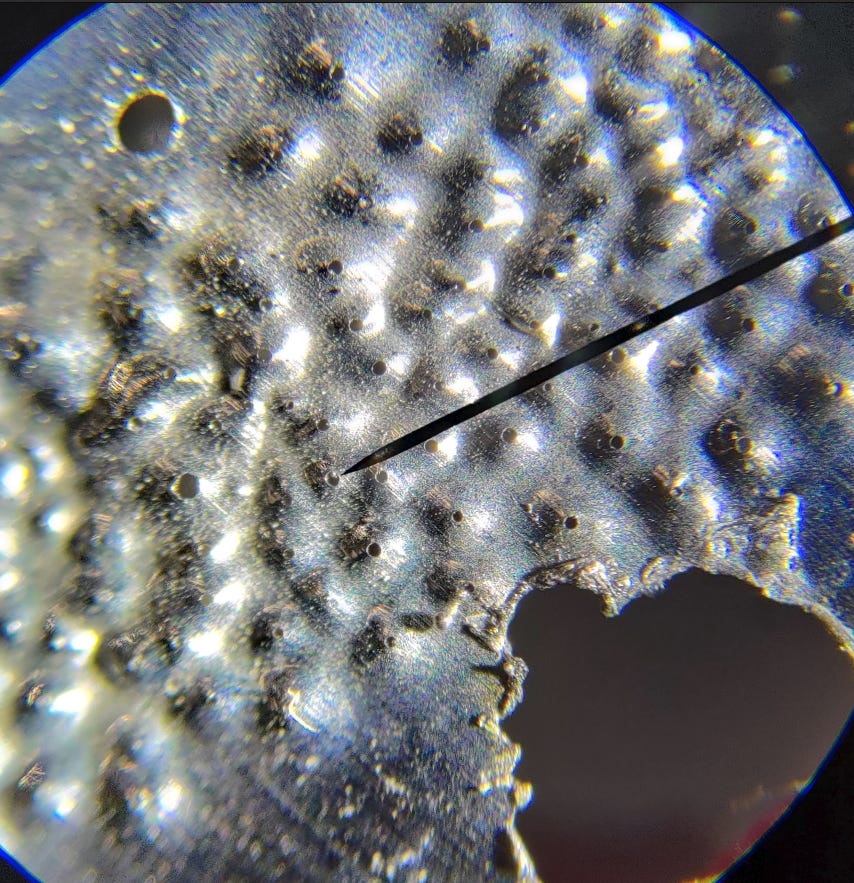
“Some visible beads/spherules also at "volcano mouth", i.e. at pointer indicator tip, but these could be aluminium” - TIBI, 26 Mar, 2025
References
Kapłonek, W., Nadolny, K., & Habrat, W. (2016). “Morphology of Near- and Semispherical Melted Chips after the Grinding Processes Using Sol-Gel Abrasives Based on SEM-Imaging and Analysis.” Advances in Materials Science and Engineering, 2016, 1–12. doi:10.1155/2016/2573920
A 4700uF capacitor charged to 30V holds roughly 2 Joules of energy. An apple, or a 200g hammer dropped from 1m height would release the same amount of energy on impact. That is more than enough to cause some dents on some foil from the energy balance perspective.
So for the EVO hypothesis the microspheres are one clue, the grid pattern where the small impact marks landed could be another, with the almost discrete and narrow distribution of spacing.
Let's hope for more SEM analysis offerings and witness marks of sinusoidal traces, preferably on samples where 3 body interaction is excluded (dust particle rolling on surface, causing the trace). X-Ray film birdies or traces are another accessible way for further clues. There are also ~500$ spectrophotometers, but need to be accompanied by pure input materials. Beyond this, I think only big players are able to investigate this alu-foil based idea, and I'd be happy to see some answers from them.
A lens, a boundary and a resonant chamber all in one 😜