

A new pre-print has been published by S.S. Lakesar and K.P. Rajeev of the Department of Physics and R.G.S. Pala of the Department of Chemical Engineering, all at the Indian Institute of Technology, Kanpur, India.
They do electrolysis using a Potassium Carbonate electrolyte in light water, a Carbon anode and a Nickel cathode. Afterwards, they placed the cathode into a cloud chamber where they observed “beta-like” tracks. Note the rate of production of tracks increases with potential applied during the electrolysis.
“The mean detection rate for the 5 V samples is 0.6 ± 0.1 cpm
and for the 20 V samples, 1.0 ± 0.1 cpm”
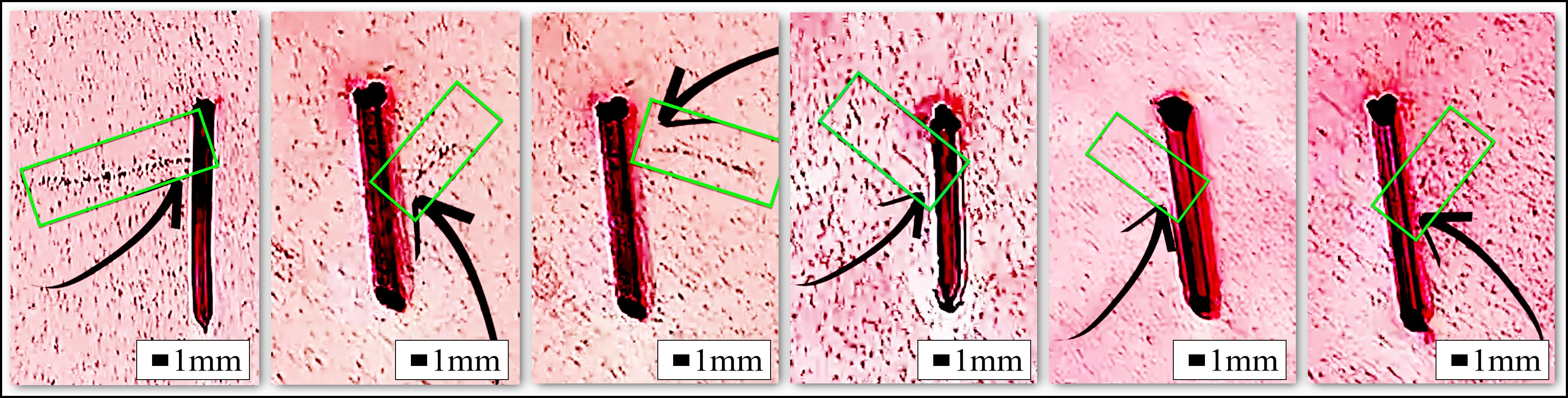
They do not see tracks in nickel that has not undergone electrolysis.
Using the track lengths and mean free path calculations they determine the energy of the particles that must have caused them.
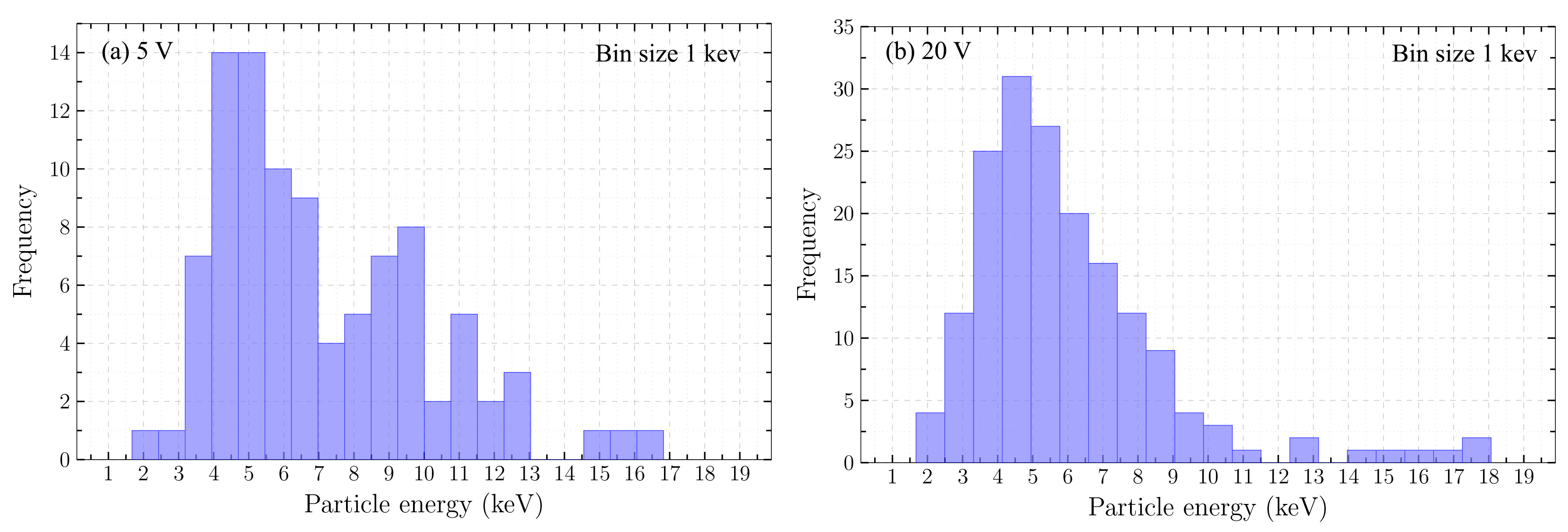
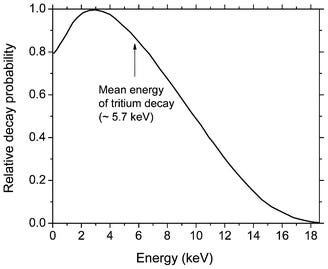
They note that the distribution and maximum energy is in line with that produced by decay of Tritium (see figure below) and is present in similar fashion after 6 months, further supporting this hypothesis.
Using the Parkhomov/MFMP reaction calculators for Tritium
If we are only considering the hydrogen component of light water, the reactions and associated energy are:
https://www.nanosoft.co.nz/Fusion.php
E1 in ('H') and E2 in ('H', 'D' ) order by MeV deschttps://lenr.academy/fusion?e1=H&e2=H%2CD&limit=500

Tritium is known to be produced
In electrolysis
We know that Tritium is produced in electrolysis, John Bockris suffered for showing this at Texas A&M in 1990. He used heavy water and LiOD (no light hydrogen), he also agreed that a pinch effect was required to reach the required field strengths and used similar small diameter electrodes as did Matsumoto.
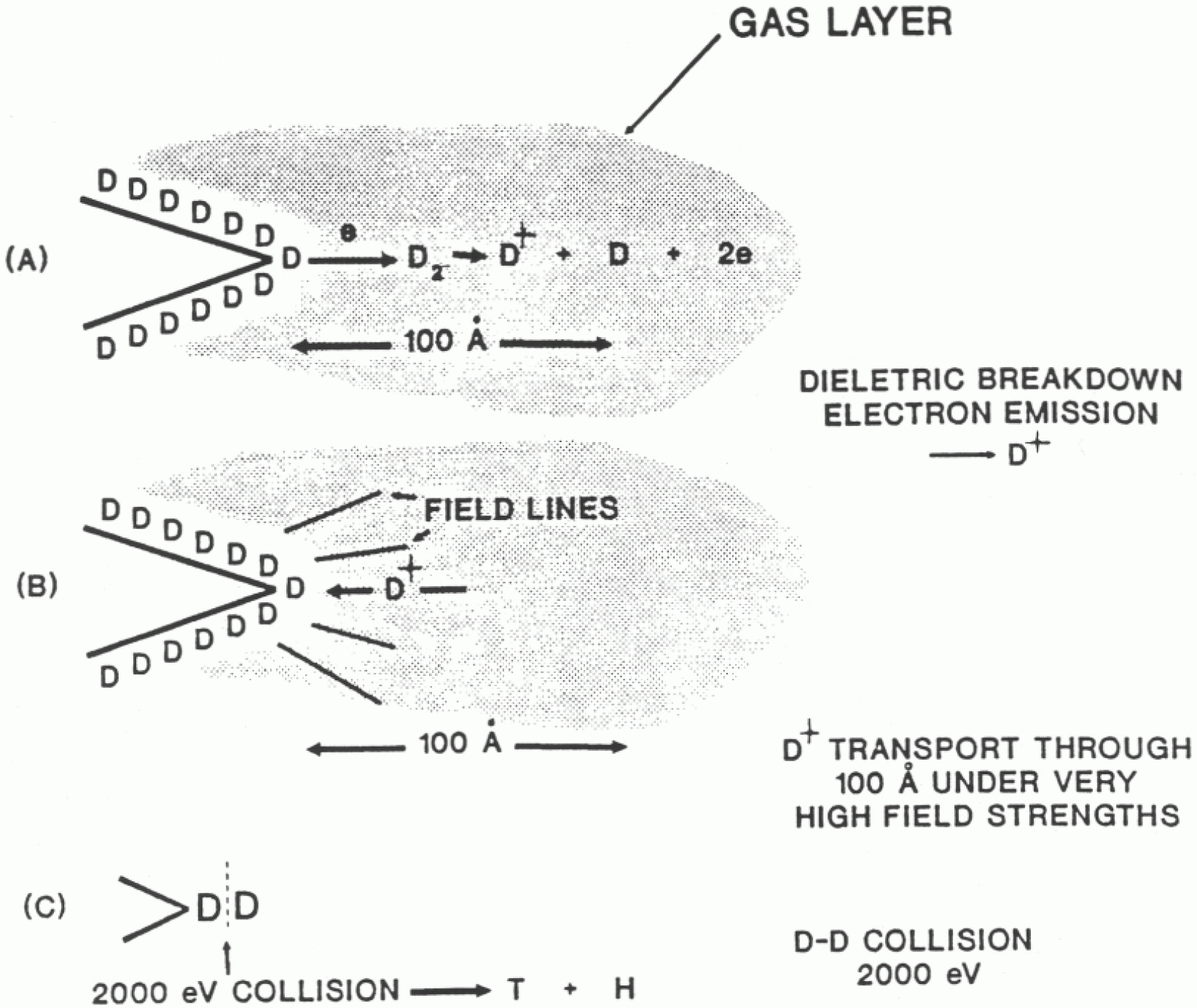
The reaction is considered to be a two (D + D) to two (T + H) reaction.

But, this ignores the other components of the electrolyte, Lithium and Oxygen. Even without considering neutrinos, in Coherent Energy Transformation processes, we can see there are many reactions that produce Tritium that have a higher yield even.
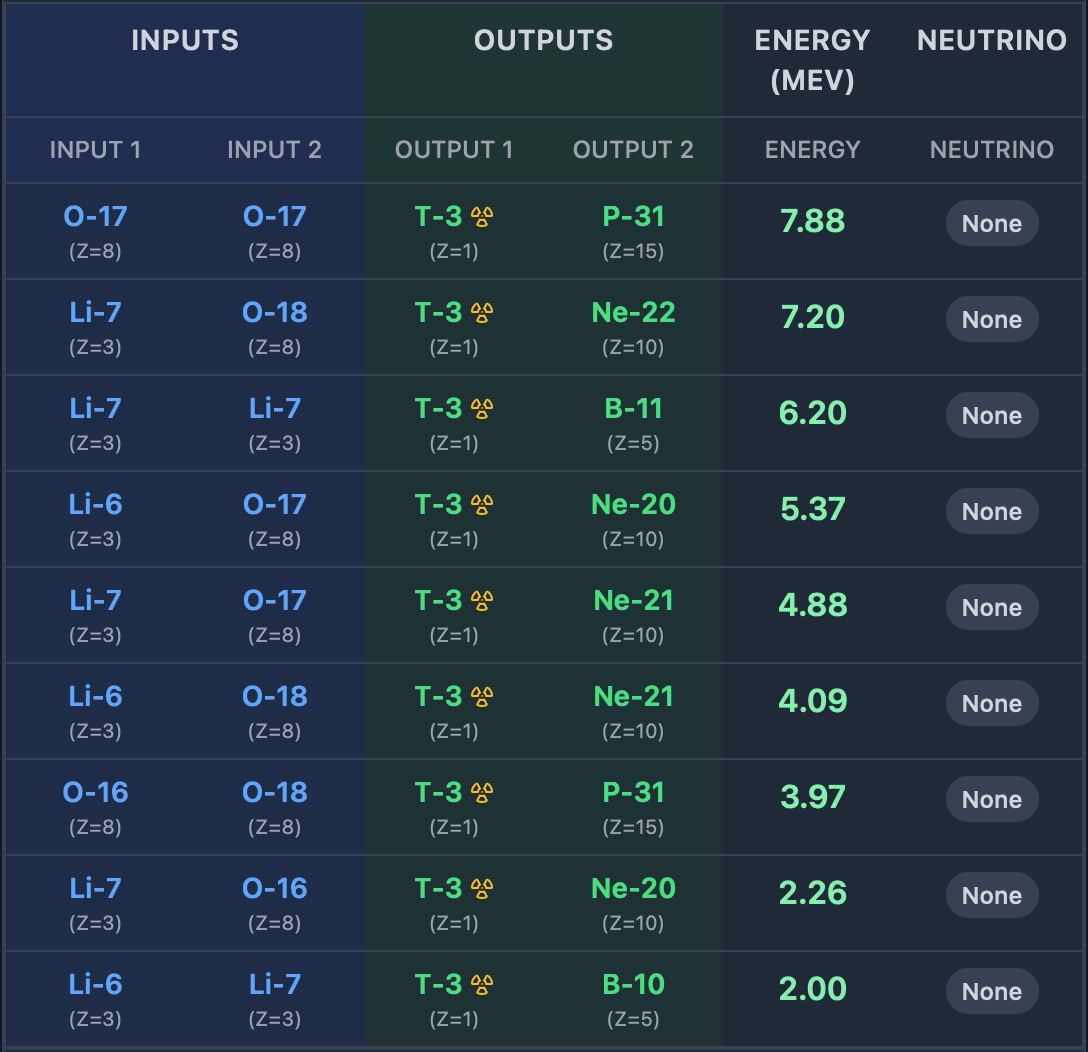
It is unfortunate that Bockris et. al. did not look for 31P or 22Ne, both element isotopes that we found in Huang et. al. cavitation heat producing reactors.
In gas corona discharge
I stood by Tom Claytor (formerly of Los Alamos National Laboratory) as he was awarded the Giuliano Preparata medal because he showed synthesis of Tritium production in corona discharge.
In gas loading and deloading
Tritium has even historically be seen in gas loading and deloading of nickel experiments also.
In cavitation
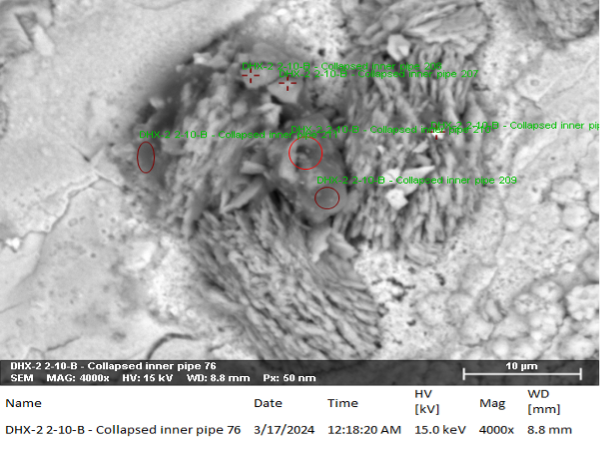
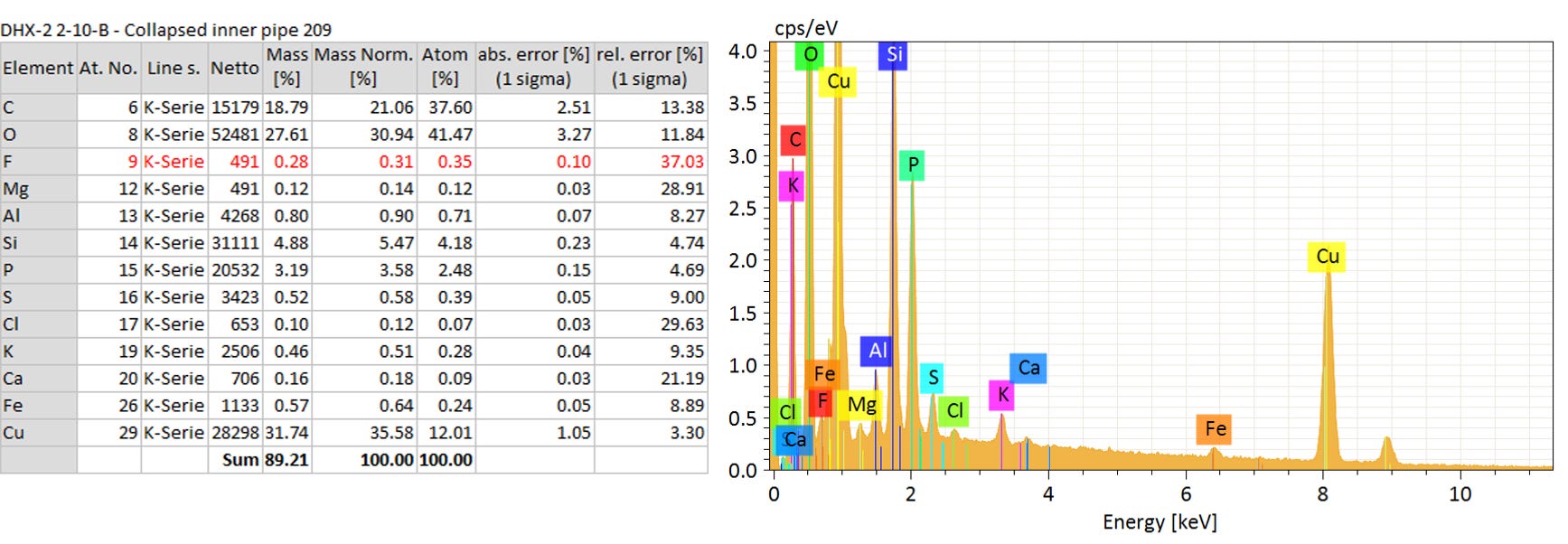
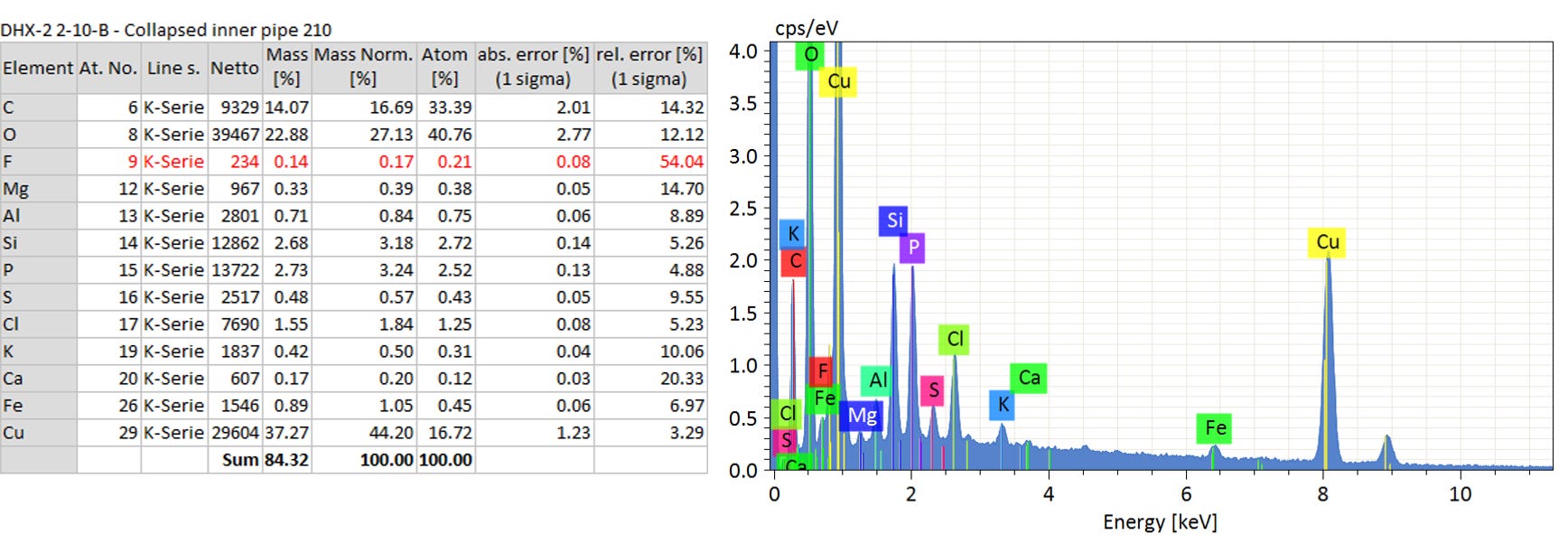
Huang et. al. has observed mass 3 production however in cavitation, it is not isolated. For example, Stringham and Claytor (2019) also saw Tritium production in addition to Na, K, Al, Ca, Mg, Si, and Cl, S and P by EDX and further elements.
All elements we have observed in cavitation, see the central area samples 209 and 210 from a broken cluster from the collapsed inner pipe from reactor DHX-2 below.
Producing Tritium from other pathways?
Videos by Dr. Takaaki Matsumoto and third parties show that electrolysis produces cavitation bubbles and pinch effect leading to magneto-hydrodynamic events. This effectively shows that all of processes above, cavitation, sound, pinch, plasma discharge and more are all part of electrolysis, with field enhancement playing a role.
Matsumoto also saw the same broad spectrum of elements produced in electrolysis and pulsed discharges in electrolytes along side mass 3 elements. So to consider only stepwise fusion of light hydrogen may be missing the full story. Of course, Matsumoto would argue that the range of elements are the result of electro-nuclear collapse followed by electro-nuclear regeneration and I am minded to agree with him. For now, let’s just consider other possible exchange reactions.
In this new work by the Indian Institute of Technology, the Anode is C (graphite) and the electrolyte contains K and C, so we must consider these elements in reactions that may produce Tritium also.
Using the Parkhomov/MFMP reaction calculators again
https://www.nanosoft.co.nz/TwoToTwo.php
E1 in ('C', 'O') and E2 in ('C', 'O', 'K' ) and E3 in ('T') order by MeV deschttps://lenr.academy/twotwo?e1=O%2CC&e2=O%2CC%2CK&e3=T&limit=500
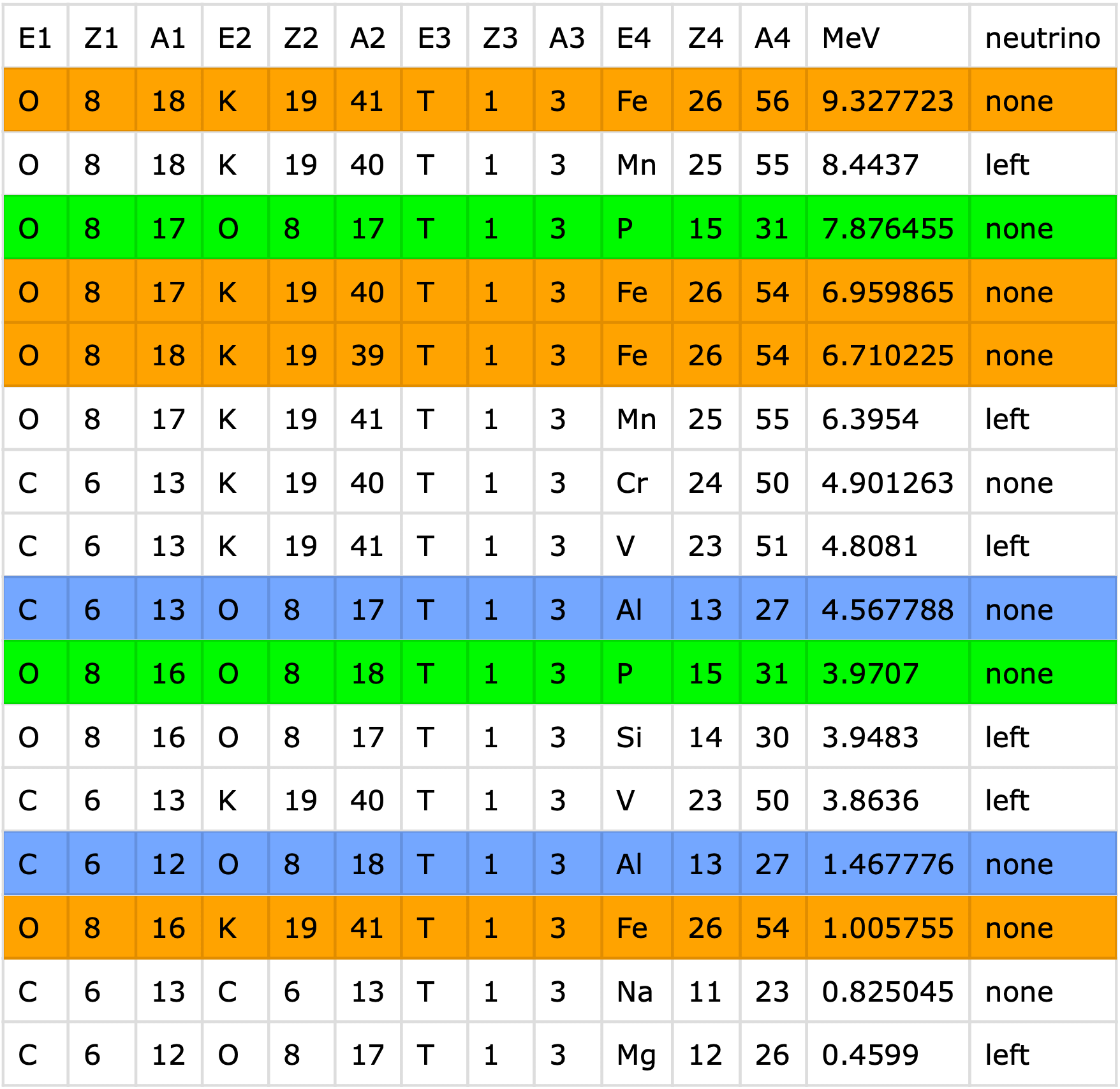
In this case, we can see a wide array of first order exchange reactions that produce many of the observed synthesised elements across independent work.
Conclusion
This new Indian work by S.S. Lakesar et. al. adds to the immense body of work observing tritium. Importantly, it shows a method where this anomaly of coherent energy transformation reactions can be observed by simple cloud chamber energetic particle analysis. This avoids confusion with HD, 3He and H3+ confounding observations and is both commendable work and could be widely repeated as described.
Based on my analysis of Huang et. al. reactor cores, we see production of mass 3 as well as abundant Fe, 31P and other elements such as Al and Si. This fact, in combination with similar observations in the literature and based on the potential reactions above, I would recommend analysis of the electrodes for these elements against areas on the same electrodes not exposed to the electrolyte. Presence of these elements would indicate that production of T may not necessarily be due entirely to Fusion of protons.
I would also consider placing the Anode in the cloud chamber.
Bravo! What an excellent read Bob, and I want to sincerely thank you for making it so digestible with great formatting and placement of charts!
Well done, Bob. I agree with Alex below: You keep the rigor of the data and bring the salient points to the average layperson, as always. The larger thrust of transmutation via CET keeps the MFMP momentum quickening. Cheers.